Rather than rushing to definitive answers, I try to let questions breathe.
- Can you tell us a little bit about yourself and your research interests?
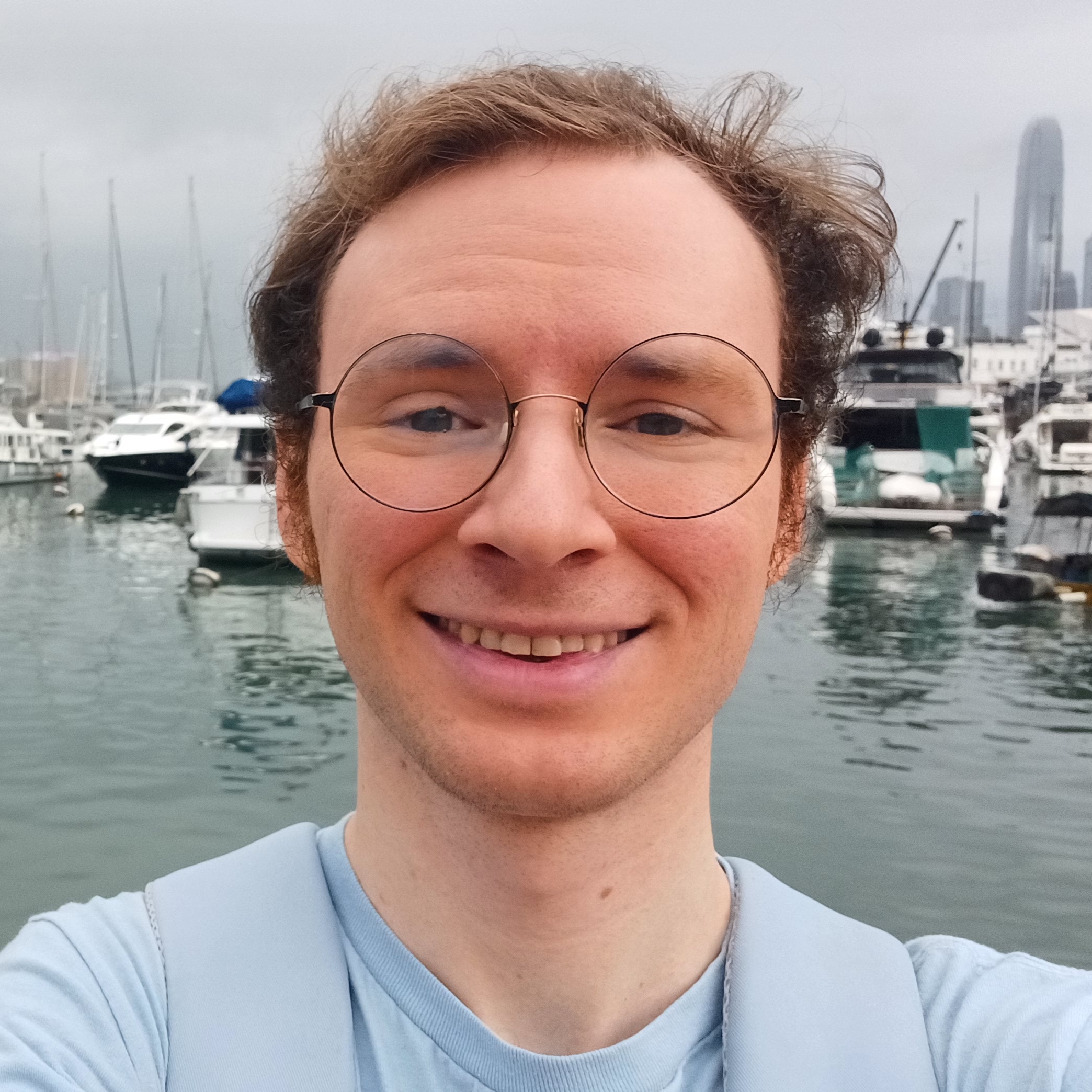
In English and other European languages, people typically call me—a silly PhD student in linguistics at the University of Tartu—“Jesse,” or “Jesse Holmes” if they want to be a little more specific. Broadly, my research interests include language typology and evolution, as well as the cognitive and communicative forces that shape them. More specifically, my PhD focuses on Differential Argument Marking (DAM), which I investigate mainly through artificial language learning experiments. But what the sigma does that mean?
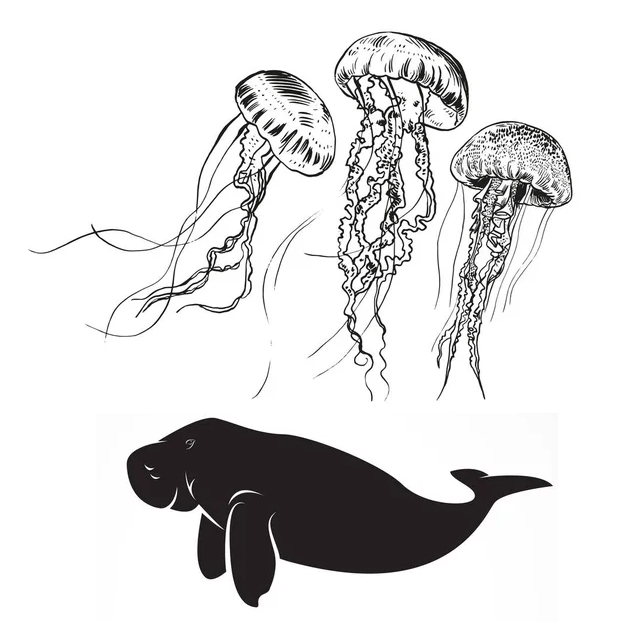
Let’s say you wanted to describe “a jellyfish stinging a dugong.” How would you show who did the stinging and who got stung? English likes to rely on word order: the doer goes before the verb, the recipient after. But lots of other languages do it differently. Instead of word order, they might add a little word or affix that says “THIS one did the stinging” or “THIS one got stung.” Here’s the fascinating part: In many languages that use those little markers, they don’t use them consistently!
And when we look closely at when they use them and when they don’t, we see similar patterns across unrelated languages. So maybe this isn’t random at all, but reflects something about how human cognition works, or maybe even a more general property of communication. To test this, we can take it to the lab! We invent a miniature language that doesn’t have the pattern, teach it to participants, and then see: Do they add the pattern themselves? And if so, under what conditions does it show up? That’s basically the heart of my research.
- What is your favorite word and why?
My favorite word might be unword, because if it’s a word then it isn’t, and if it isn’t then it is. Or maybe it’s the space between words? Or maybe it’s all the words ever uttered or signed smashed into one giant compound? Or just a simple word never written from long ago? Or maybe it’s a piece of epic chungus brainrot that hasn’t been cooked up yet? Or a bit of future algospeak that arises to dodge Big Brother and his ban-thirsty mods. Or perhaps it’s a word spoken by another species—or even extraterrestrials—that we haven’t discovered yet! Or maybe it’s this word I just asked a non-human language-speaking entity (AI) to make up: skrindleff (v. to wobble-bounce in a zig-zag way when you’re too full of energy and don’t know what to do with it; e.g., “I skrindleffed down the hallway after drinking too much caffeine”). Or maybe it’s the word dinemo I use to refer to the following things: 🐓 🦢 🦜 🦩 —you might think it means “bird,” but it actually means “dinosaur emoji.”
But most of all, maybe it’s a word I’ll invent myself; one designed as a stimulus in my next artificial language learning experiment to try to make sense of (at least a little bit of) this mess!
- Let’s put reality aside for a bit. If you had unlimited resources, what’s the one big research
question you would like to answer?
I would like to investigate what alien languages could look like. One of the main goals of linguistics — especially in typology and cognitive linguistics — is often framed as: given these observations (i.e., linguistic data), what can we infer about cognition (or about our constraints, priors, or biases, whatever terminology you prefer)? To put it in a more ananthropocentric sense: Given some communicative behavior, what can we infer about the cognition of that organism or agent?
I want to flip the script and ask instead: Given a set of constraints/biases in cognition and perception-production, what kinds of communication systems are likely to arise? Some conlangers (people who construct languages, think like, J.R.R. Tolkien’s Elvish in Lord of the Rings, or David Peterson’s Dothraki in Game of Thrones) have already been exploring this space, treating their languages not just as art or extra lore for their fantasy worlds, but also as thought experiments. Denis Moskowitz’s Rikchik, for example, is signed by organisms with a large eye, 49 tentacles, and no sound perception; they communicate by manipulating seven of their tentacles. Another project, UNLWS (Unker Non-Linear Writing System) by Alex Fink and Sai, imagines a non-linear, fully two-dimensional writing system, which raises fascinating questions about syntax under such constraints. And more recently, I’ve started developing a language for colonial organisms inspired by siphonophores. Their intercolonial communication uses color, shape, and movement, expressed through thermochromatic transformations in a liquid-crystal epidermis—the constraints of which lead to very different linguistic structures from what you would expect of human communication.
Of course, most of this is done for fun, as a playful hobby, but wouldn’t it be awesome to turn it into rigorous academic inquiry drawing from the wide range of disciplines necessary to make such speculations? What insights might we gain about our own cognition, or the cognition and
communication of other terrestrial species, through such inquiry? Xenobiology is already an existing field speculating about forms of life based on alternative biochemistries—both extraterrestrial and synthetic. Why not xenolinguistics, where we speculate about languages grounded in cognitive and anatomical possibilities different from our own? After all, AI in the form of LLMs is already here: a system capable of language, yet both cognitively and anatomically quite distinct from us!
- What book, paper, or thinker has had the biggest impact on your research approach?
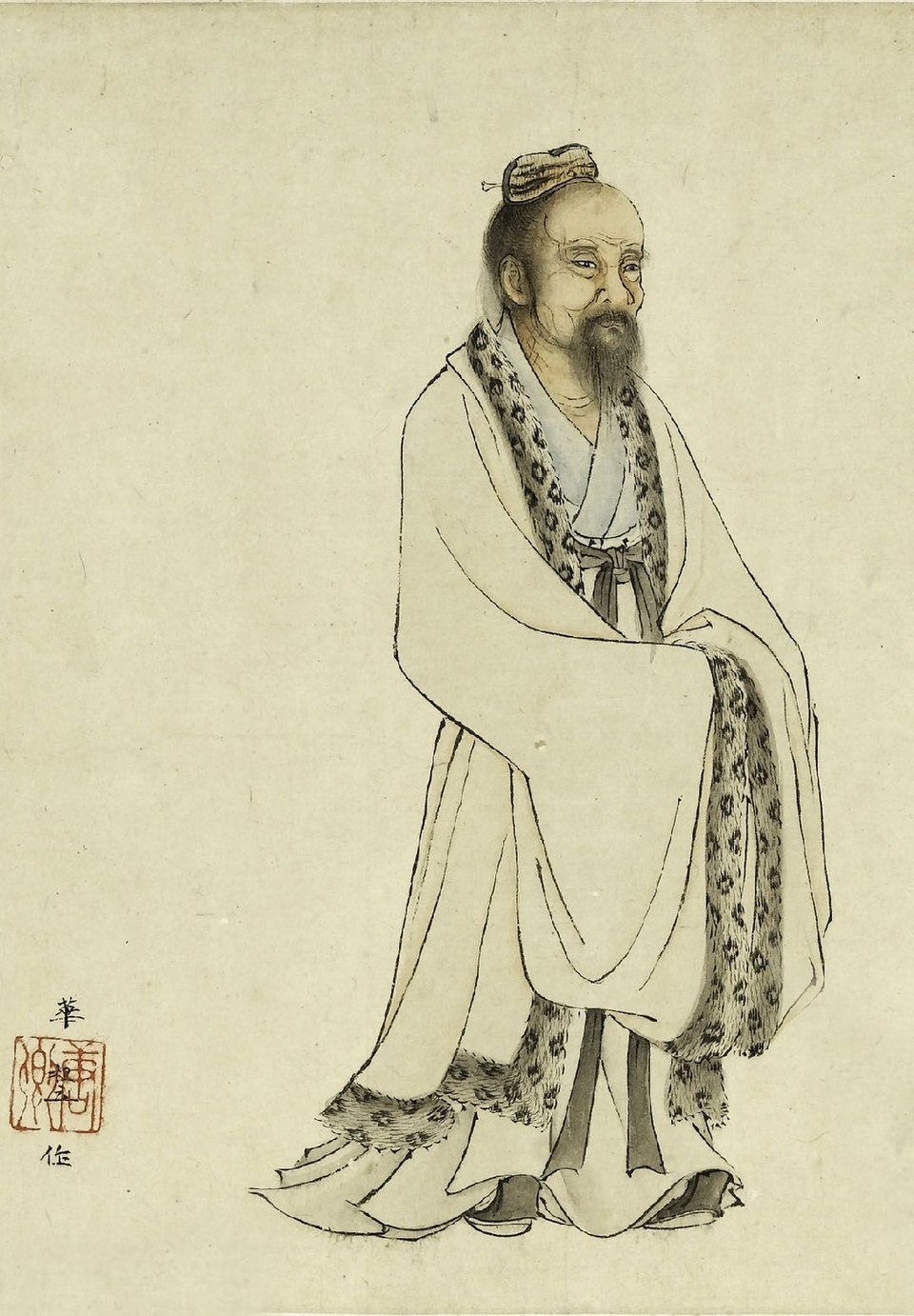
The thinker who’s influenced my research approach (and approach to life in general) the most is probably Zhuangzi. His writing, with its playful stories and refusal to cling to fixed perspectives, helps me remember to embrace uncertainty and approach research with curiosity, openness, and imagination. No matter what other thinkers or books I read, or what new perspectives I seek out, I always find myself returning to his texts. Rather than rushing to definitive answers, I try to let questions breathe, to explore them from many angles, to consider the infinite possibilities we can’t see, to look for the this in every that and vice-versa, and to keep an unjaded spirit of playfulness and whimsy even in “serious” work.