
Thank you everybody for partaking in the final evaluation survey!
We can now check off all our documents for the European Union, whose funding, along with UKRI, has made our project possible.
But what were the final results? Let’s take a look…
The statement ‘I found my engagement with MEDAL to be useful for my research and/or career’ received 45 out of 46 agreeing responses, so that’s the first good news already. In addition, this positive effect has bled into appreciation of the European Union, as again a majority of respondents responded positively to the statement ‘I am likely to advocate for the EU as a result of engaging with MEDAL activities’.
As we all know, MEDAL’s funding came from the EU’s Twinning scheme and from the United Kingdom Innovation and Research. Thus, we were curious to see if our project has changed people’s opinion on the EU. While most people responded that their opinion of the EU has not changed, the results show that if a respondent replied that their opinion of the EU has changed, this change was always towards a more positive opinion than they initially had. Thus, funding projects such as MEDAL is a great opportunity to showcase the benefits of the EU. In addition, the results show that indeed more people are familiar with the research conducted at the University of Tartu, one of the goals MEDAL set out to achieve.
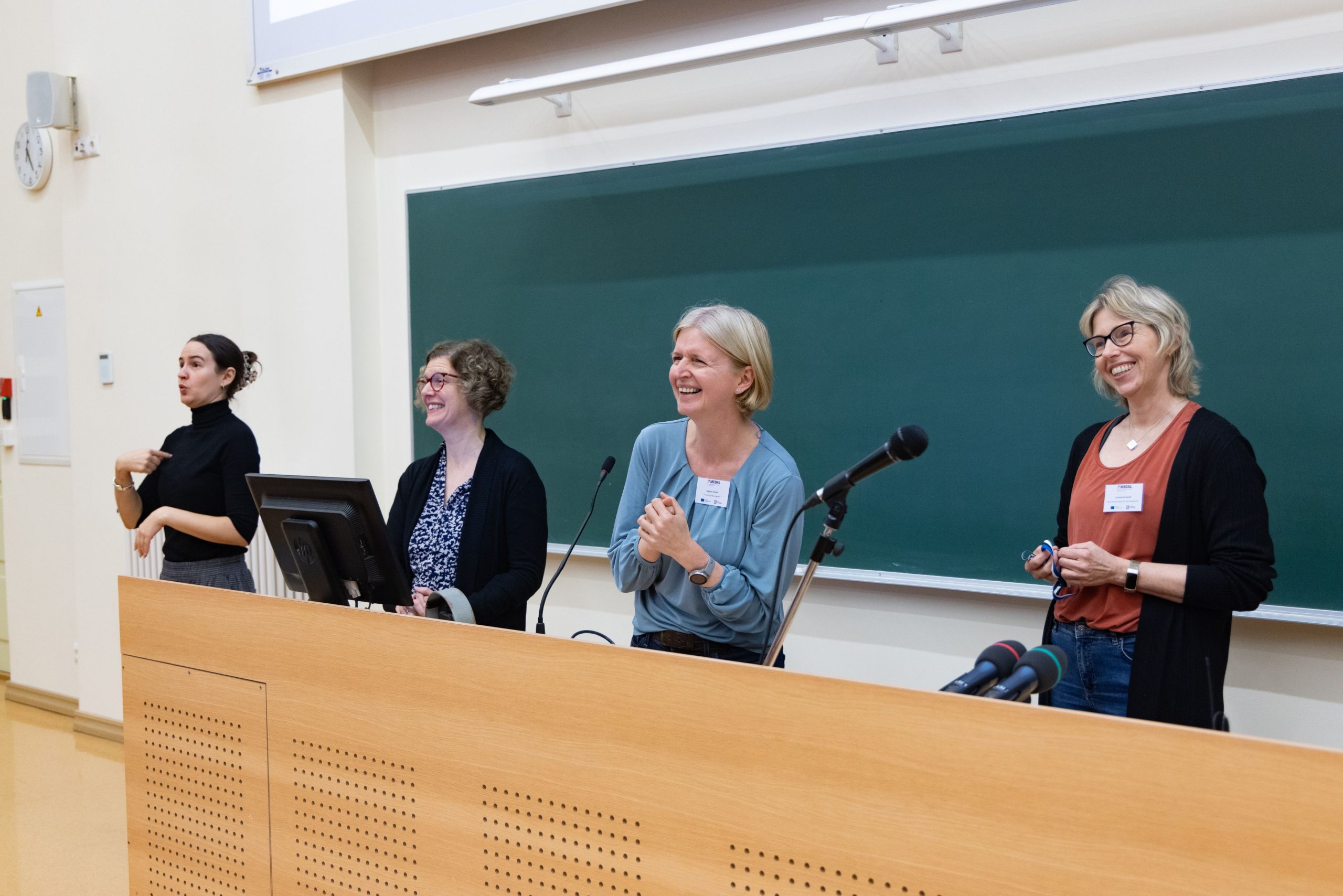
When respondents were asked whether they would like to highlight anything in particular about their engagement with MEDAL that they found useful, the following topics emerged: networking, feeling inspired by engaging with MEDAL, learning about methods, the accessibility of the events, as well as the mention of specific events. Specific events which were highlighted as particularly useful were the summer schools and the soft skills workshops. One respondent mentioned they “appreciate the holistic approach to what ECRs need […] both “hard” and “soft” skills”. MEDAL’s mobility schemes were also appreciated, with one respondent mentioning: “I really enjoyed that I didn’t have to look for outside funding when participating in one of the summer schools.” Accessibility-related things which were mentioned were the fact that most events were hybrid, and that the summer schools were free of cost. One critical point about the summer schools that was raised, was that they “could have some longer and more detailed courses along with short courses.” Due to the summer schools being restricted to one week, the format of most courses was a ‘sampler’: an introductory course to a certain method with pointers on how to continue (self)education on said method. The value of meeting new people and collaborating was highlighted by many participants, with comments such as “[it] was wonderful to meet other ECRs in similar career stage and problems”, “[it was] useful to learn about what other researchers were doing” and “I am grateful to have been part of it and I have met new people/friends!”
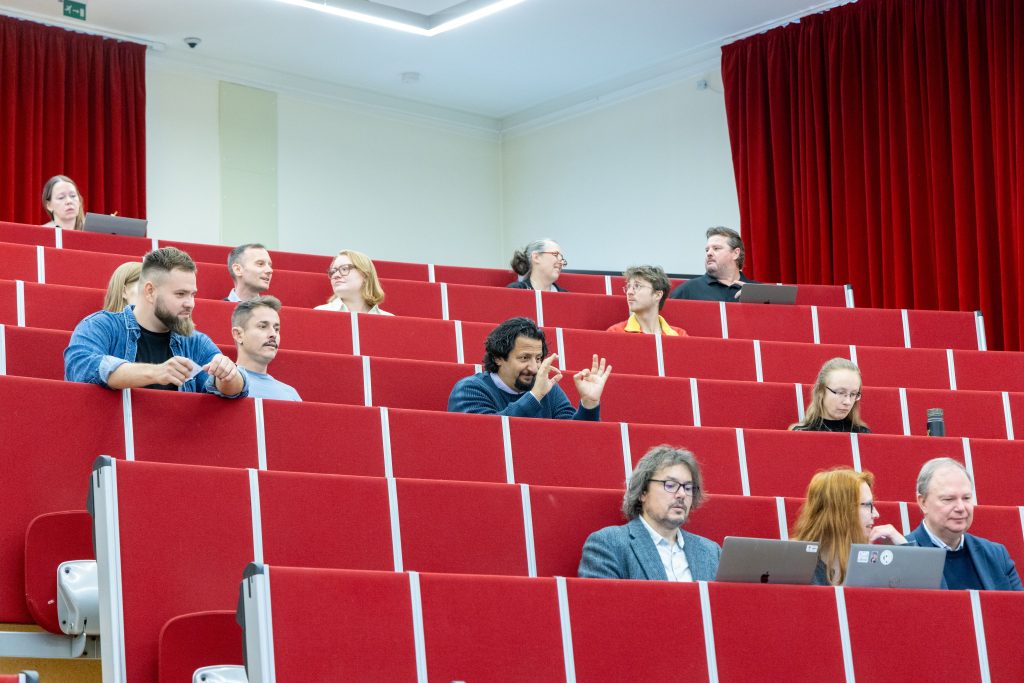
Participants coming together for the final conference
This networking has led to a few collaborative projects and follow-up activities, well done everyone!
In addition, many respondents expressed their general appreciation and gratitude for being engaged with MEDAL in the open text fields. Statements like “Just continue similar incentives” and “I’d love to see a continuation of this project, which would introduce even more methods (even qualitative ones)” indicate that there is a need for such projects.
.